
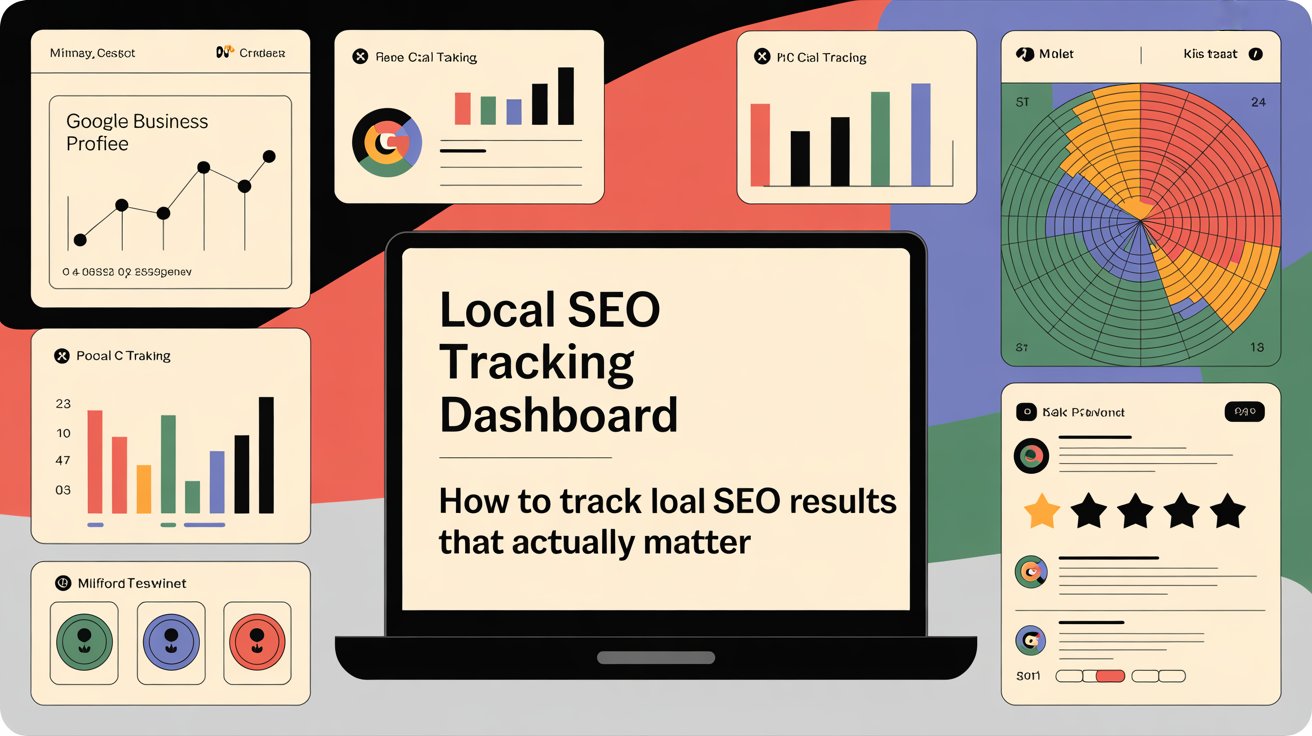
Hello, and welcome to my post about How to Measure Local SEO Performance for Your Business. Learn how to measure local SEO performance for your business using actionable metrics—track Map Pack visibility, GBP key stats, and more.
Local SEO is one of the most powerful drivers of leads for small and service-based businesses — but only if you know how to measure success.
Are you just looking at rankings? Or are you actually tracking the actions that lead to real customers — like phone calls, website visits, and direction requests?
Unlike national SEO, local SEO includes map-based visibility, proximity-based search, and offline conversions — things like phone calls or walk-ins. If you’re not measuring local-specific performance, you’re flying blind.
You can’t improve what you don’t measure.
Tracking allows you to focus your energy on the channels that produce results. It eliminates guesswork and provides hard evidence you can act on. When done consistently, performance measurement gives you a roadmap for sustainable growth.
See what’s actually driving calls and leads
Know whether your optimizations are working
Prove ROI to clients (or yourself)
Identify local ranking issues quickly
Top Metrics to Measure for Local SEO Success
Google Business Profile Insights
The most important local data comes directly from your Google Business Profile (GBP) dashboard:
- Impressions: How many times you appeared in local search or maps
- Clicks: How many people visited your website
- Calls: How many clicked to call from your listing
- Direction Requests: How many searched for driving directions
- Search Queries: See what terms triggered your listing
- You can view this in the GBP dashboard or by connecting to GA4.
Pro tip: Look at trends, not just snapshots. Did your impressions double after optimizing your categories? Did call volume increase after getting new reviews?
Local Pack Rankings (Map Pack)
Use a local rank tracker (like BrightLocal or Local Falcon) to monitor your position in the 3-pack for:
- Primary keywords ("Plumber near me")
- Service keywords ("Emergency drain cleaning")
- Geo-modified keywords ("Milford tile installer")
Track by ZIP code or specific GPS coordinates — because local rankings are proximity-based.
Create benchmark maps across your service area. These geo-grid maps show how your visibility shifts block by block. This helps spot coverage gaps and optimize accordingly.
Website Conversions from Local Traffic
In Google Analytics (GA4), you can:
- Filter traffic from GBP using UTM parameters
- Track goal completions like form fills, phone calls, and chat initiations
- Attribute revenue or leads to specific local campaigns using source/medium data
Set up custom dashboards for local traffic so you can visualize:
- Which landing pages convert best from GBP
- What local keywords lead to bookings
- How local SEO stacks up against paid and social
Pair this with heatmaps (like Hotjar) for deeper behavior analysis.
Citation Health and Consistency
Tools like BrightLocal, Whitespark, or Moz Local can:
- Scan your NAP listings
- Highlight inconsistencies
- Track overall citation score
- Show historical changes and improvements
Citation accuracy still affects rankings, so this should be checked quarterly.
NAP errors confuse search engines and create credibility issues. Fixing even a few broken citations can result in an instant bump in visibility.
Review Quantity, Velocity, and Sentiment
Measure:
- Number of new reviews per month
- Average star rating across Google and third-party sites
- Keywords that show up frequently in reviews
- Sentiment over time using review monitoring tools
Set review benchmarks for each quarter. Aim to grow both the volume and diversity of your reviews.
Responding to reviews — even negative ones — also impacts rankings and conversions. Make it part of your weekly routine.
Tools to Measure Local SEO Performance Effectively
Google Business Profile Dashboard
Your main source for impressions, actions, and local interactions.
Use this to track how many people are discovering your business and what actions they’re taking. Compare month over month and analyze trends.
Set custom date ranges and export data for client reporting.
Google Analytics 4
Connect GBP traffic to see website behavior, conversion rate, and ROI. Be sure to:
- Add UTM tags to GBP links
- Set up custom events and goals
- Create a dashboard focused on local traffic performance
Create audience segments specifically for local visitors and use funnels to diagnose drop-offs.
BrightLocal
BrightLocal
Track local rankings, citations, reviews, and more. Ideal for agencies and multi-location businesses.
BrightLocal’s grid reports show how your business ranks across a map area, revealing hot spots and weak zones for local visibility.
Use their citation builder and reputation manager for added efficiency.
Local Viking or Local Falcon
Great for geo-grid ranking maps — shows how you rank from multiple locations around town.
These visual maps make it easier to explain progress to clients or business partners. They’re also key to spotting changes in local algorithm behavior.
CallRail or WhatConverts
Track calls back to their source. Essential for proving real ROI.
These tools also integrate with GA4 and CRMs, giving you a closed-loop system for lead attribution and quality scoring.
Use call recordings to refine ad copy or improve staff sales skills.
How Often Should You Monitor Local SEO Performance?

- Weekly: Rankings, GBP impressions, reviews
- Monthly: Calls, conversions, GA4 analytics, new citations
- Quarterly: Audit citation consistency, monitor long-term trends, review competitor benchmarks
For busy business owners, create a summary report you can skim in five minutes. Focus on what changed and what’s working.
Common Mistakes to Avoid When Measuring
Only measuring rankings (not actions or conversions)
Rankings alone don't pay the bills. Make sure you're tracking the actions that lead to actual business.
Ignoring proximity when checking search results (use incognito and GPS location simulation)
Use incognito mode and GPS location simulation to get accurate results based on where your customers are searching from.
Failing to tag GBP links with UTM codes
Without proper tagging, you can't properly attribute traffic and conversions to your Google Business Profile.
Not integrating GBP with GA4 and Search Console
Integration gives you the full picture of how users move from discovery to conversion.
Skipping regular citation audits
Citations can become inconsistent over time, hurting your visibility if not regularly checked.
Another mistake: obsessing over vanity metrics (like bounce rate) instead of business-driving KPIs (like calls and form submissions).
Also: using general SEO tools that don’t account for local proximity or map visibility. Local SEO requires a different toolkit.
Measuring local SEO performance isn’t about chasing rankings — it’s about understanding the actions that lead to real-world business.
When you know which keywords, locations, and listings are generating phone calls, clicks, and form fills, you can double down on what’s working and fix what’s not.
With the right setup, you’ll see:
- Clear ROI from local efforts
- Faster issue detection
- Stronger case studies for your agency or business
Local SEO isn’t one-and-done — it’s a continuous improvement loop. And performance measurement is the compass that keeps you heading in the right direction.

👉 Want help setting this up? Explore our Local SEO Services
📥 Or grab our free Local SEO Quick Win Checklist