Welcome to my post on Local SEO Citation Building, where I hope you will learn how local citations boosts SEO, why NAP consistency matters, and the top strategies to improve local rankings fast.
If you're trying to rank your local business in Google Maps and organic search, citations are still a major ranking factor—and most businesses overlook them.
Learn the difference between structured and unstructured citations, how to build them the right way, which tools can help you manage everything efficiently, and the common mistakes to avoid.
Learn how citations fit into a full SEO strategy → Read our Local SEO guide
What Are Local Citations?
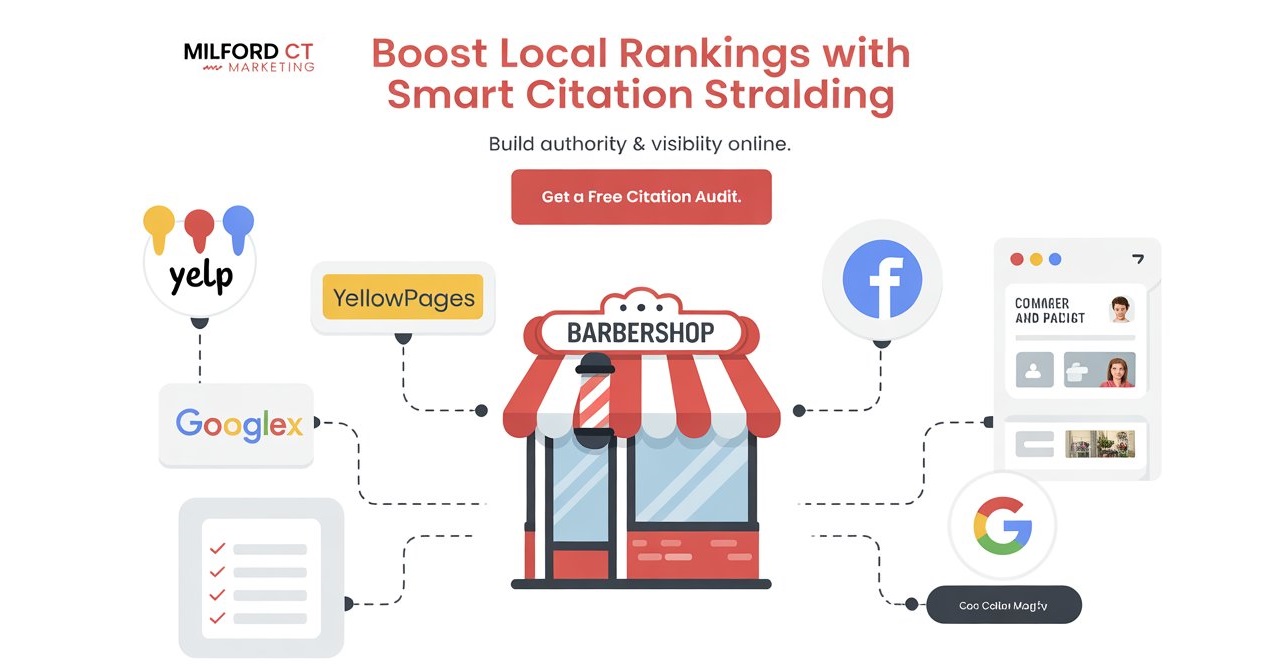
Local citations are any online mention of your business’s Name, Address, and Phone Number—also known as NAP. These citations can appear in:
- Online directories (like Yelp, YellowPages, and Foursquare)
- Local chamber of commerce websites
- Review platforms
- Industry-specific directories
- News articles and blog posts
Citations help validate the existence and legitimacy of your business across the web. The more accurate and consistent they are, the more search engines trust your business info—and that can directly improve your Google rankings.
Citations also serve as an opportunity for visibility outside your own website. When people search for services in your area, having a consistent presence across directories increases the likelihood of getting discovered.
A well-cited business also builds local awareness. The more times users encounter your name, the more likely they are to remember and choose your service over a competitor.
Why Local SEO Citation Building Matters
When your NAP is consistent across trusted websites, it reinforces your legitimacy to Google. But when there are inconsistencies (like outdated phone numbers, misspellings, or duplicate listings), it confuses search engines and weakens your local rankings.
Key benefits of building citations:
Improved visibility in Google’s local pack
Citations are one of the core factors Google uses to determine relevance and proximity.
Greater authority and trust
Consistent listings make your business appear more credible and established.
More referral traffic from niche and general directories
Many people still use Yelp, Angi, and other directories to find service providers.
Increased opportunity for reviews
Some platforms allow customers to leave feedback, adding social proof to your profile.
Stronger brand awareness
Being listed across multiple directories reinforces your business name in the minds of searchers.
Google is constantly crawling the web to verify business data. If it sees the same NAP details repeated across various platforms, it becomes more confident about your business’s legitimacy. That trust translates to better rankings and more visibility for your brand.
Structured vs. Unstructured Citations
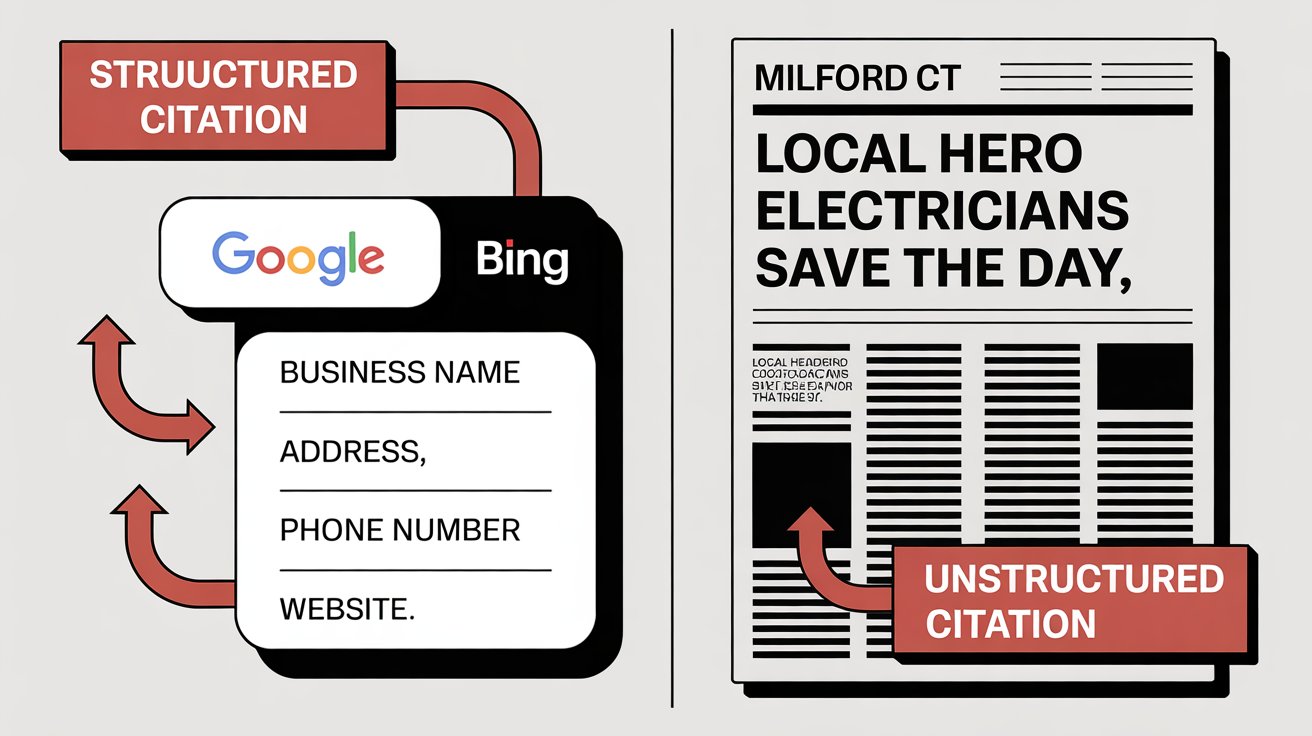
Structured Citations
These include your NAP details in a consistent format on a business listing platform. Examples:
- Yelp
- Facebook Business Page
- Apple Maps
- Google Business Profile
- Bing Places
Structured citations are easy for search engines to crawl and interpret, which strengthens the trustworthiness of your business data.
Having structured citations across high-authority directories ensures your business is found by people actively searching for services like yours. These listings often rank high in organic search, providing indirect SEO benefits through backlinks and impressions.
Unstructured Citations
These include mentions of your business in online content without being in a traditional directory. Examples:
- A newspaper article that quotes your business
- A blog post that includes your business name and address
- A press release on a local news site
Unstructured citations help you build topical relevance and authority. They also provide SEO value in the form of natural backlinks and context.
The best way to build unstructured citations is through public relations, guest blogging, and outreach to local publications. Every time your business is mentioned in a trustworthy piece of content, Google takes notice.
How to Build Citations the Right Way
Step 1: Audit Your Current Listings
Start with a citation audit. Tools like BrightLocal, Whitespark, or Yext can scan hundreds of directories and highlight:
- Missing listings
- Inconsistent NAP info
- Duplicate entries
- Listings with outdated content
This is your foundation. Don’t build new citations until your existing ones are cleaned up.
A comprehensive audit may reveal listings you didn’t know existed or expose inconsistencies that are costing you rankings. The key is to clean your online presence before adding new data.
Step 2: Fix Inconsistencies
Ensure your business name, phone number, and address are written the exact same way across all listings. For example:
- Don’t switch between "St." and "Street"
- Avoid using different phone numbers unless absolutely necessary
- Stick to a standard format for your business name (no “Inc.” in one and not the other)
Update outdated listings manually or through automation tools. Consistency is not just for Google—it also reassures customers that they’ve found the right business.
Step 3: Claim and Complete Listings
Claim your profiles on key directories and complete them fully:
- Google Business Profile: This is your anchor citation.
- Bing Places & Apple Maps: Covers major search engines.
- Yelp, Facebook, and BBB: High-authority platforms.
Add as much info as possible—business hours, services, payment types, images, and a keyword-rich description.
A fully completed listing can outrank competitors, especially in the Google 3-pack, because it provides more trust signals and usability for searchers.
Step 4: Build New Listings
After cleaning and claiming, submit your business to:
- Top-tier general directories: Like Yelp, MapQuest, YellowPages, Foursquare.
- Industry-specific directories: Such as Houzz for home services, Avvo for legal, ZocDoc for healthcare.
- Local directories: Chamber of Commerce, local news sites, or city-run business pages.
Aim for quality over quantity. A few authoritative citations are better than dozens of low-quality ones.
Building citations gradually over time appears more natural to Google than bulk submissions. Keep a spreadsheet to track where you’ve submitted and when.
Step 5: Automate or Outsource
If you're short on time, use tools like:
- BrightLocal: Automated submission, tracking, and reputation management.
- Whitespark: Great for manual outreach to niche directories.
- Yext: Real-time updates to dozens of platforms from one dashboard.
Outsourcing ensures accuracy and scale—but always review the reports to make sure listings match your branding.
You can also hire SEO professionals or agencies who specialize in local citation building. Make sure they provide detailed reports so you stay in control of your NAP consistency.
Top Tools for Managing Citations
BrightLocal
Scan existing listings, fix inconsistencies, and submit to new directories. Great for agencies and small businesses alike.
Whitespark
Offers both DIY tools and manual citation building services. Especially good for hyper-local or niche industries.
Yext
Offers real-time data syncing and advanced analytics, best for multi-location businesses.
Moz Local
Affordable alternative for listing distribution and monitoring.
Each tool has pros and cons depending on your goals. If you’re hands-on, BrightLocal is ideal. If you want automation, Yext may be worth the investment.
Use these tools not just for setup but for ongoing maintenance. Citation accuracy can drift over time, especially if your business changes locations, phone numbers, or brand identity.
Common Citation Mistakes To Avoid
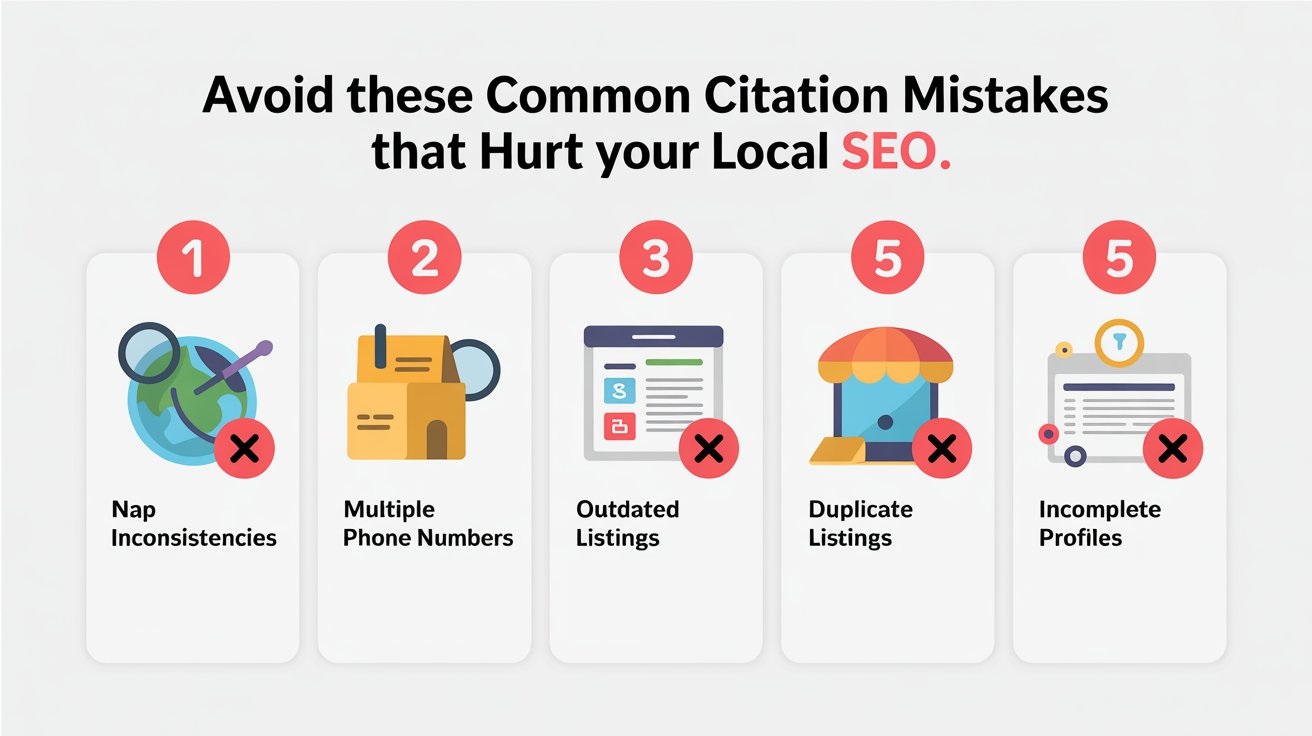
Even one small mistake in your listings can reduce trust and hurt your local rankings. Watch out for:
NAP inconsistencies: Conflicting versions of your name, address, or phone number.
Multiple phone numbers: Don’t use a different number for every listing unless you're using proper call tracking methods.
Outdated listings: Make sure all business info reflects your current branding and operations.
Duplicate listings: If you’ve moved locations or changed business names, remove or merge old listings.
Incomplete profiles: Empty fields reduce the value of a listing. Always complete every section.
Many businesses unknowingly hurt their SEO by neglecting citation hygiene. Schedule routine audits (quarterly or biannually) to stay clean.
Final Thoughts
Citation building isn’t flashy, but it’s foundational to local SEO. Think of it as digital plumbing—if there’s a leak (like an outdated phone number or duplicate listing), your rankings and visibility will suffer.
Whether you do it manually, use software, or hire an expert, accurate citation building gives your business a solid footing for long-term local SEO success.
Citations send local trust signals to Google and increase your chances of landing in the map pack or ranking higher in localized search results. Skipping this step leaves the door open for competitors to outrank you.
Want to make sure your citations are done right?
👉 Check out our Local SEO Services
📥 Or download our Local SEO Checklist