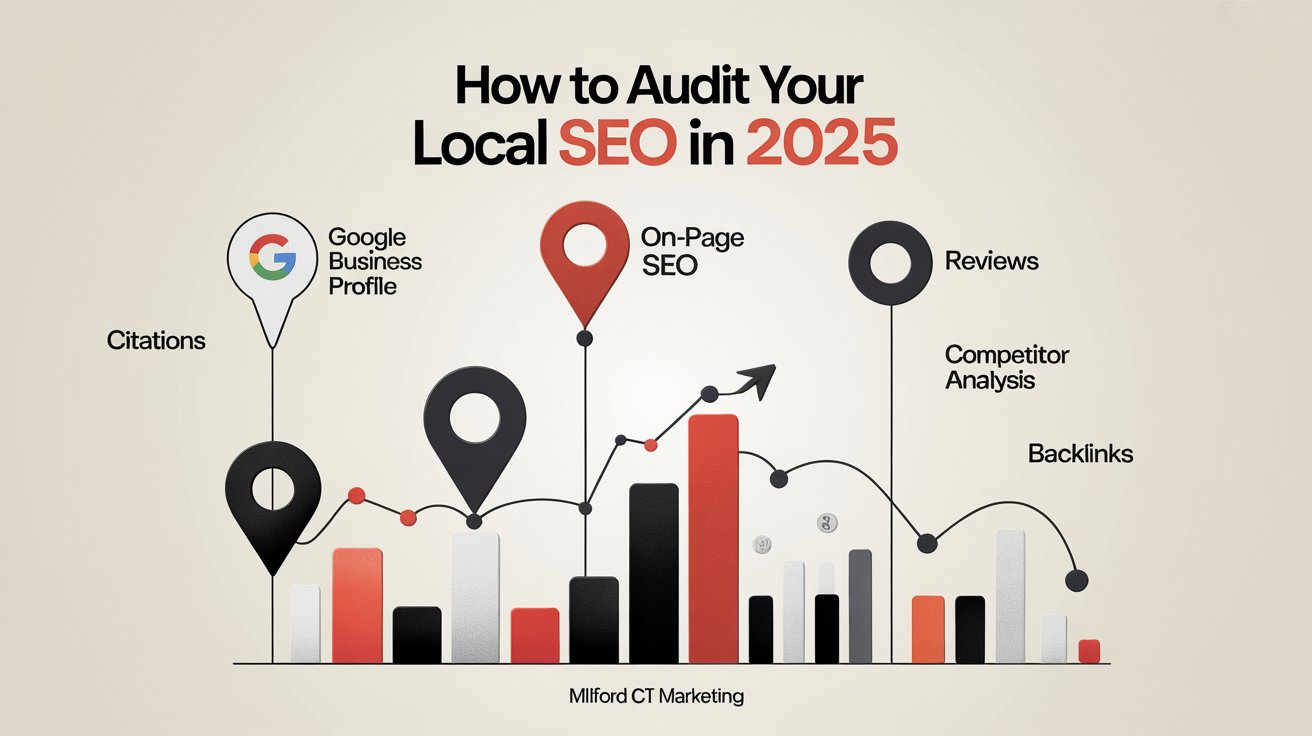
Welcome to my post on How To Audit Your Local SEO in 2025. This is an updated strategy for the times. In this post, we will learn
How to perform a 2025-ready local SEO audit to uncover ranking issues and win more leads. Ideal for small and service-based businesses, especially if you're a service-based business like a plumber, HVAC pro, tile installer, or home remodeler.
🔁 This article is part of our Local SEO Services Guide — your complete roadmap to getting found on Google Maps and local search in 2025.
A local SEO audit reveals blind spots in your current strategy. Think of it like an annual health check-up — but for your business’s online visibility. It helps you:
- Spot missing or inaccurate citations
- Evaluate your Google Business Profile setup
- Analyze local keyword rankings
- Identify weak backlinks or unoptimized content
- Benchmark against top competitors
Auditing is the first step in improving — and in a space as competitive as Google Maps, every advantage counts.

Step 1: On How To Audit Your Local SEO: Check Your Google Business Profile
Profile Accuracy
Is your business name accurate and consistent across the web?
Are your primary and secondary categories correctly selected? These directly affect what search queries you rank for.
Are you listing all of your service areas?
Content Quality
Is your business description keyword-rich but written in a natural tone?
Are you uploading photos regularly (interior, exterior, team, projects)?
Are you getting new reviews every month?
Are you posting weekly updates that highlight services, promotions, or community involvement?
👉 Use the search test: Type “your service + city” into Google. Does your listing appear? Who ranks above you, and why?
Advanced Tip:
Enable messaging through your GBP. It’s a signal of engagement and accessibility, and Google considers both.
Bonus Insight:
Many businesses overlook the Services section — make sure yours is filled out with relevant offerings, keywords, and pricing where possible. This helps Google understand your value proposition.
Step 2: Audit Local Citations
Local citations (mentions of your NAP: Name, Address, Phone Number) are one of the most overlooked ranking signals. They help Google validate that your business is legit and active.
Citation Tools
Use tools like BrightLocal, Whitespark, or Moz Local to scan citation accuracy
Directory Coverage
Check all major directories: Yelp, Angi, BBB, Apple Maps, Nextdoor, Yellow Pages
Industry Listings
Review industry-specific citations (e.g., Houzz for contractors, HomeAdvisor for home services)
Local Opportunities
Look for hyper-local opportunities: town directories, community boards, chambers of commerce
🔁 Update or suppress duplicate or outdated citations that cause confusion
✅ Pro Tip: Make sure your NAP matches exactly — even down to “Street” vs “St.”
Bonus Insight:
Keep a citation management spreadsheet with date submitted, login credentials, and approval status. This will save you hours in the future.
Step 3: Analyze On-Page Local SEO
Google still relies heavily on your website content to understand what you do and where you serve. Here’s how to audit it:
- Title tags should include primary service + city
- H1, H2, and body copy should reinforce location and services
- Pages should load in under 2.5 seconds, especially on mobile
- Make sure your schema markup is correctly applied for LocalBusiness, Services, Reviews, and OpeningHours
- Your homepage and each service page should internally link to each other
- Build separate city or location pages if you serve multiple towns
- Include testimonials and FAQs with geo-specific language
🧠 Did you know? Including neighborhood names in your copy and image alt text can help with hyper-local relevance.
Bonus Insight:
Add service-based FAQs (e.g., "How long does tile installation take in Milford?") using FAQ schema to potentially earn rich results and boost CTR.
Step 4: Evaluate Reviews and Engagement Signals
Google values behavioral signals, not just technical ones. Here’s how to assess engagement:
- Are you getting clicks on calls, directions, and website from your GBP?
- Are you replying to every review — both positive and negative?
- Are reviews using relevant service and location keywords?
- Are you earning reviews from diverse platforms — not just Google (e.g., Facebook, Yelp)?
- Do users upload photos in their reviews?
📈 Use Google Business Profile Insights and call tracking to analyze volume trends.
💬 Responding to reviews within 48 hours improves your engagement score and builds trust.
Bonus Insight:
Use automated follow-up emails or texts to request reviews post-service. Tools like GatherUp, Podium, or Birdeye can help scale this process.
Step 5: Benchmark Against Top Competitors
Look at who ranks above you for your core search terms. Then reverse-engineer their strategy:

Review Google Listings
Analyze their categories, reviews, updates, and services
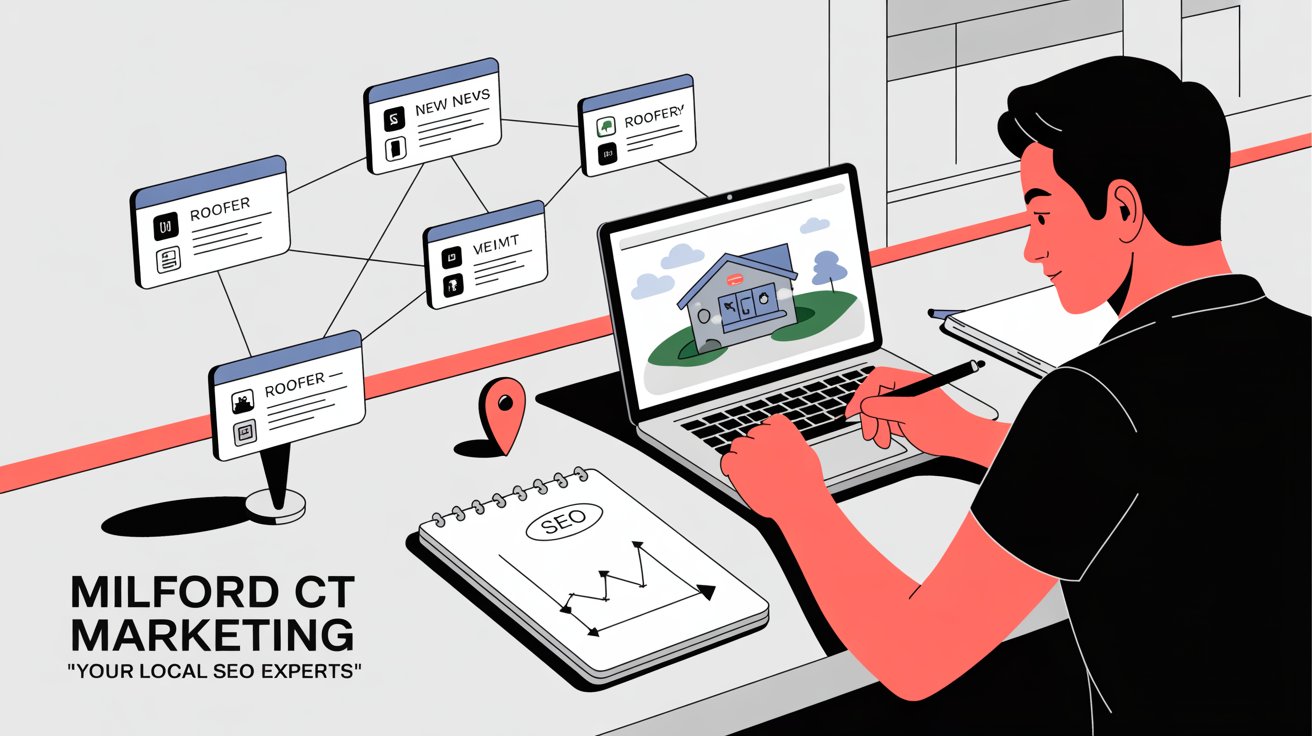
Analyze Websites
Check for keywords, schema, and mobile optimization

Examine Content
See if they're publishing blog content with local relevance
Study Backlinks
Look at their backlink profile using tools like Ahrefs or SEMrush
📊 Use tools like GMB Everywhere or Local Falcon to visually compare rankings across zip codes.
🕵️♂️ Find content gaps: If they have city pages and you don’t — that’s a clue.
Bonus Insight:
Run a mini content audit. Are their blogs ranking for keywords like “best plumber in [city]”? Create something better and more helpful, and promote it locally.
Step 6: Evaluate Backlinks and Authority
Even local SEO needs domain authority to rank well — and local backlinks help the most:
- Use Ubersuggest, Ahrefs, or SE Ranking to evaluate who’s linking to you
- Aim to build backlinks from:
- Local nonprofits (sponsorships)
- Schools and PTAs
- Business associations
- Local bloggers or press
- Check for toxic backlinks and disavow them via Google Search Console
- Add new content that earns links naturally (e.g., guides, tools, case studies)
📎 For a complete approach: Read our guide to building local backlinks

Bonus Insight:
Offer to write a guest column for a local news outlet or blog. These links carry serious authority and drive relevant local traffic.
Final Thoughts: Make Local SEO Audits a Habit
If you're serious about ranking in the Map Pack, a yearly (or even quarterly) audit is a must.
Document your findings. Set clear goals. And take action based on real data.
🎯Ready to get more traffic from your service area?
Download Resources
📥 Download our High-Impact Google Business Profile Optimization Checklist
Get Expert Help
🤝 Schedule a free Local SEO Discovery Call to put this audit into action