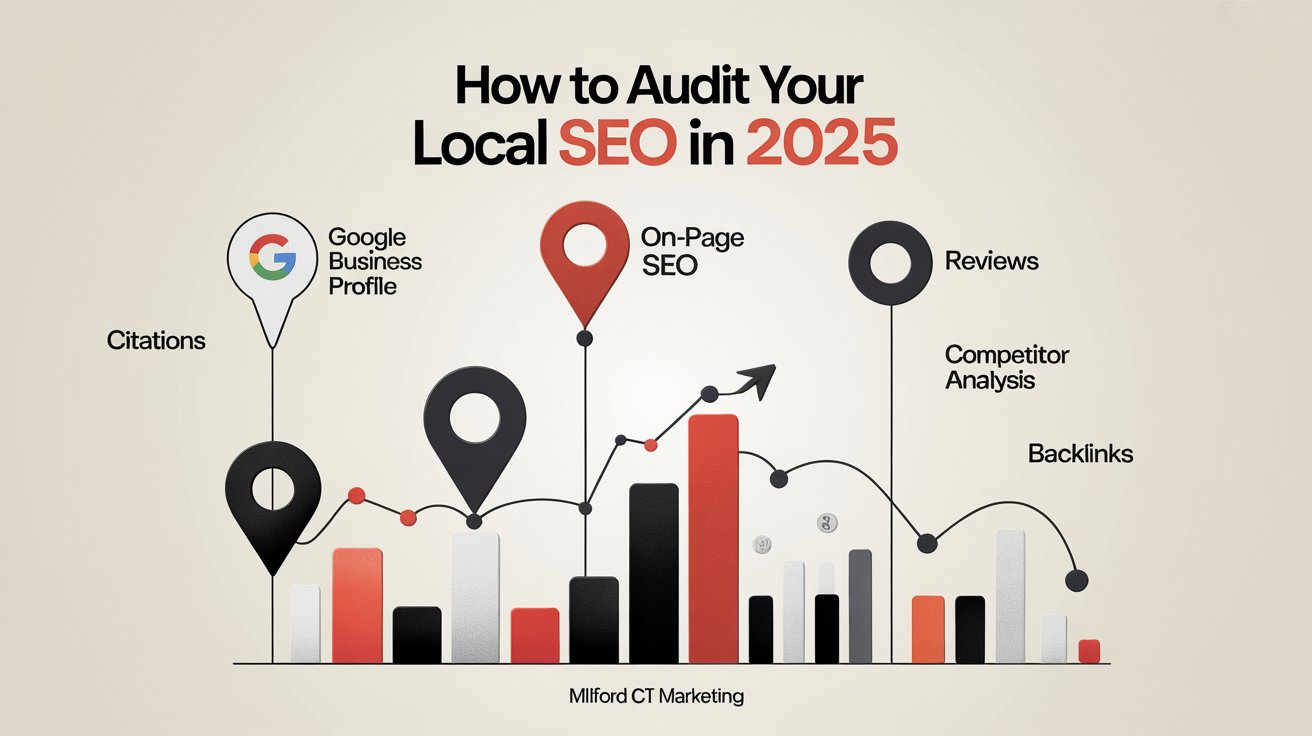
This is a practical, step-by-step way to audit your own local SEO, built for service businesses, plumbers, HVAC pros, tile installers, remodelers, and anyone else whose customers search by location.
Why Audit At All

An audit reveals blind spots, think of it as an annual check-up for your online visibility. It helps you spot missing or inaccurate citations, evaluate your Google Business Profile, check your real keyword rankings, find weak backlinks or thin content, and see where you actually stand against your competitors. Auditing is the first step to improving, and in a space as competitive as the Map Pack, every advantage counts.
Step 1: Check Your Google Business Profile
Profile accuracy: Is your business name consistent everywhere? Are your primary and secondary categories actually correct, these directly affect what searches you show up for? Are all your real service areas listed?
Content quality: Is your business description written naturally, not stuffed with keywords? Are you uploading real photos regularly, interior, exterior, team, projects? Are new reviews coming in monthly? Are you posting weekly updates?
Run the search test: type "your service + your city" into Google. Do you show up? Who ranks above you, and why?
Two things worth doing that get skipped often: turn on messaging through your profile, it's a real engagement signal Google notices. And fill out the Services section completely, with real offerings and pricing where you can, it helps Google understand exactly what you do.
Step 2: Audit Your Local Citations
Citations are mentions of your name, address, and phone number across the web, and they're one of the most overlooked ranking signals. They help Google confirm your business is real and active.
- Use a citation tool (BrightLocal, Whitespark, or Moz Local) to scan for accuracy
- Check the major directories: Yelp, Angi, BBB, Apple Maps, Nextdoor, Yellow Pages
- Check industry-specific listings too, Houzz for contractors, HomeAdvisor for home services
- Look for hyper-local opportunities: town directories, community boards, your local chamber of commerce
- Update or remove any duplicate or outdated citation causing confusion
Make sure your info matches exactly, even down to "Street" versus "St." Keep a simple spreadsheet of every citation, where it's listed, login info, and status, it saves hours later.
Step 3: Check Your On-Page Local SEO
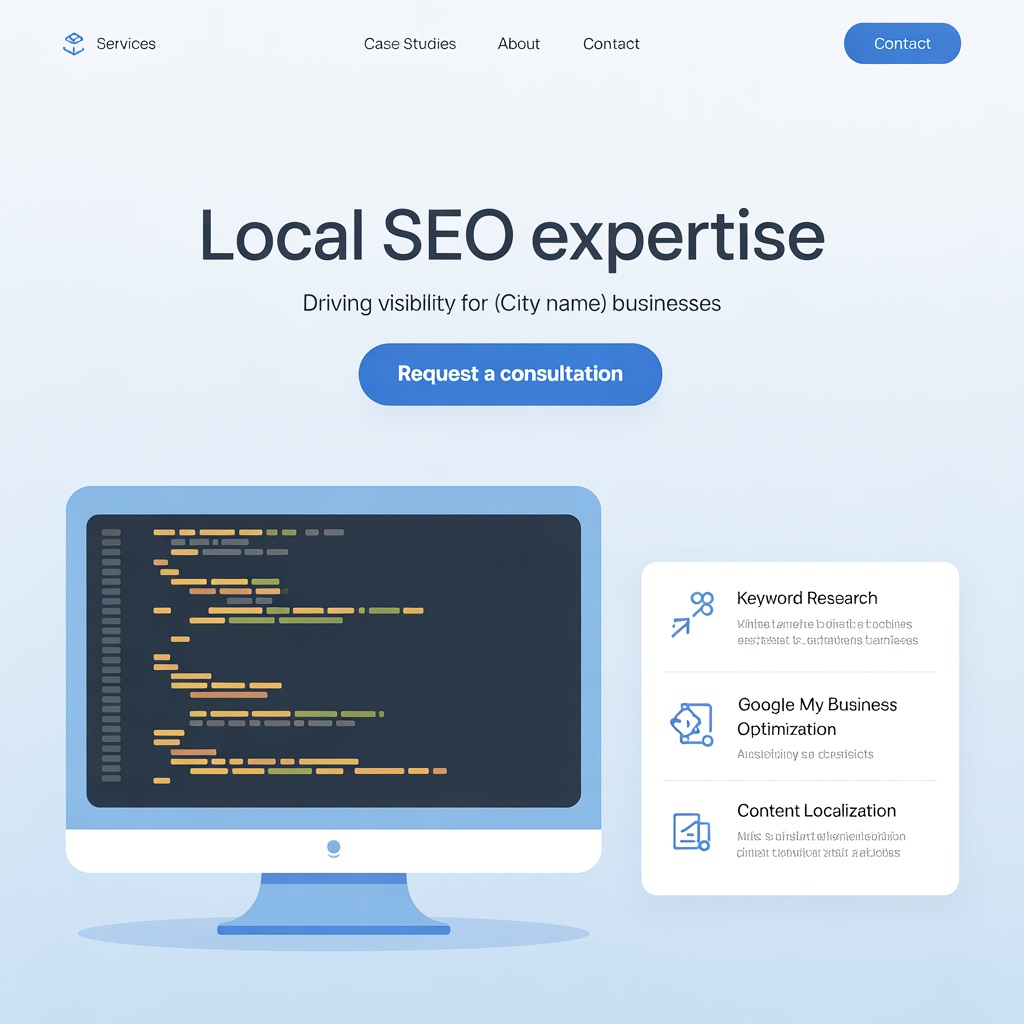
Google still relies heavily on your own website to understand what you do and where. Check that:
- Title tags include your primary service plus your city
- Your H1, H2s, and body copy reinforce both location and service
- Pages load in under 2.5 seconds, especially on mobile
- Schema markup is applied correctly for LocalBusiness, Services, Reviews, and hours
- Your homepage and service pages link to each other
- You've built separate pages for each town if you cover more than one
- Testimonials and FAQs use real, location-specific language
Including neighborhood names in your copy and image alt text helps with hyper-local relevance. A service-specific FAQ ("How long does tile installation take in Milford?") using FAQ schema can also earn a rich result in the search listing.
Step 4: Check Your Reviews And Engagement Signals
Google weighs behavioral signals too, not just technical ones. Check whether you're getting clicks on calls, directions, and your website from your profile. Are you replying to every review, positive and negative? Are reviews mentioning your actual services and location? Are you earning reviews on more than just Google, Facebook and Yelp too? Do customers upload photos with their reviews?
Use your Google Business Profile Insights and your own call tracking to see the real trend over time. Responding to reviews within 48 hours genuinely improves engagement and builds trust.
Step 5: Benchmark Against Your Top Competitors

Look at whoever ranks above you for your core searches, then check their listing (categories, reviews, updates, services), their website (keywords, schema, mobile speed), their content (are they publishing anything locally relevant), and their backlinks. If they have city-specific pages and you don't, that's a real gap worth closing.
Step 6: Check Your Backlinks And Authority
Even local SEO needs some real authority behind it, and local backlinks help the most. Check who's actually linking to you, and look for opportunities to earn links from local nonprofits (sponsorships), schools and PTAs, business associations, and local bloggers or press. Check for anything toxic and disavow it through Google Search Console. New content that's genuinely useful, a guide, a tool, a real case study, earns links naturally over time. See our full guide to building local backlinks for more on this specifically.

Make This A Habit, Not A One-Time Thing
If you're serious about ranking in the Map Pack, do this yearly at minimum, quarterly is better. Write down what you find, set a real goal, and act on it.
Want help putting your own audit into action? Book a free discovery call.