
🔧 HVAC Website Design That Actually Drives Leads
A HVAC website design should do more than look good—it must build trust, showcase expertise, and make booking or quote requests effortless.
Below are nine elements that must be present in today's HVAC Websites that optimize for lead generation.
To see all our websites we offer please visit this page
1. Mobile‑First & Super Fast Loading
Why it matters: Over 60% of traffic comes from mobile users, especially for emergencies during uncomfortable weather. Google now prioritizes mobile-first websites in rankings
Best Practices:
Design
Design starting from small screens and scale upward (aka mobile-first responsive design)
Friendly Buttons
Ensure tap-friendly buttons and easy-to-read text without zooming.
Fast Loading Speeds
Use techniques like lazy loading, optimized images, and caching to keep page speed high
2. Clear, Intuitive Navigation and Sticky Header
Why it matters:
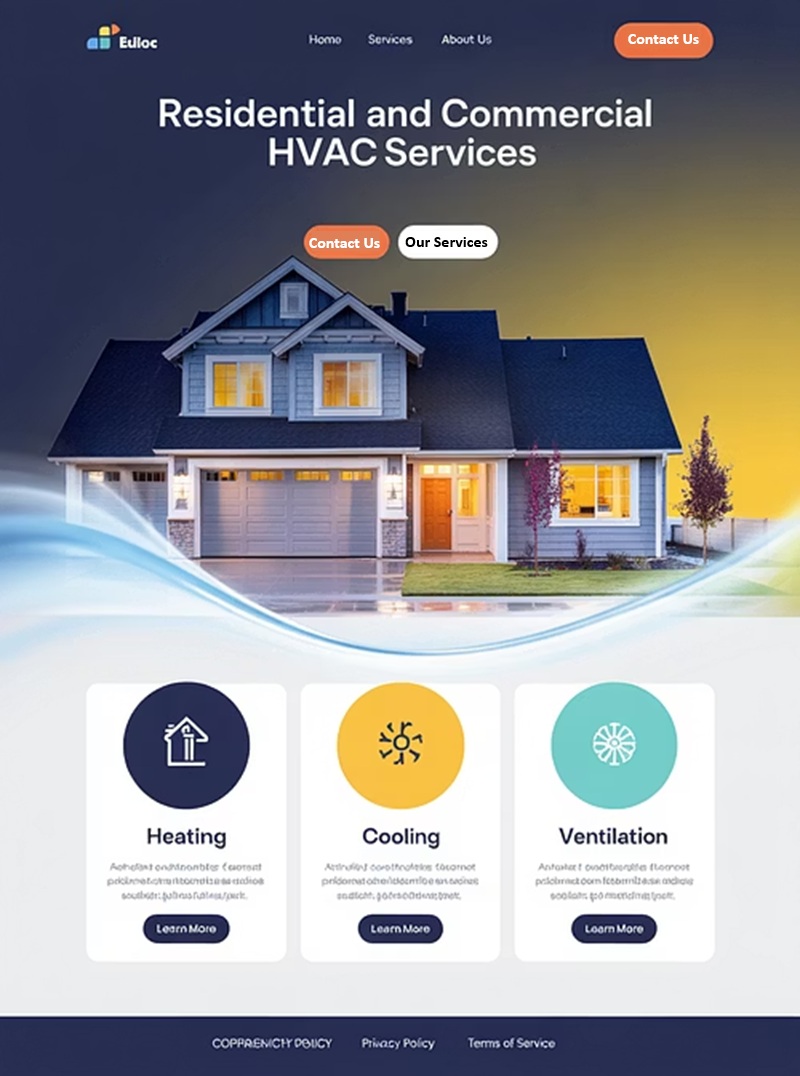
Customers need quick access to services, contact info, and booking options.
Best practices:
A sticky header menu that includes: Services, About, Service Areas, Reviews, Contact, and the company phone number
.
Organize content with submenus, bullet lists, and clear labels.
Add breadcrumb navigation to support site structure, crawlability, and user orientation
.
3. Strategic Call-to-Action (CTA)
Your Title Goes Here
Your content goes here. Edit or remove this text inline or in the module Content settings. You can also style every aspect of this content in the module Design settings and even apply custom CSS to this text in the module Advanced settings.
Your Title Goes Here
Your content goes here. Edit or remove this text inline or in the module Content settings. You can also style every aspect of this content in the module Design settings and even apply custom CSS to this text in the module Advanced settings.
Your Title Goes Here
Your content goes here. Edit or remove this text inline or in the module Content settings. You can also style every aspect of this content in the module Design settings and even apply custom CSS to this text in the module Advanced settings.
4. Local SEO & Geo‑Targeted Service Pages
Why it matters: HVAC businesses serve specific locations; without optimized local pages, you miss ranking opportunities.
Best practices:
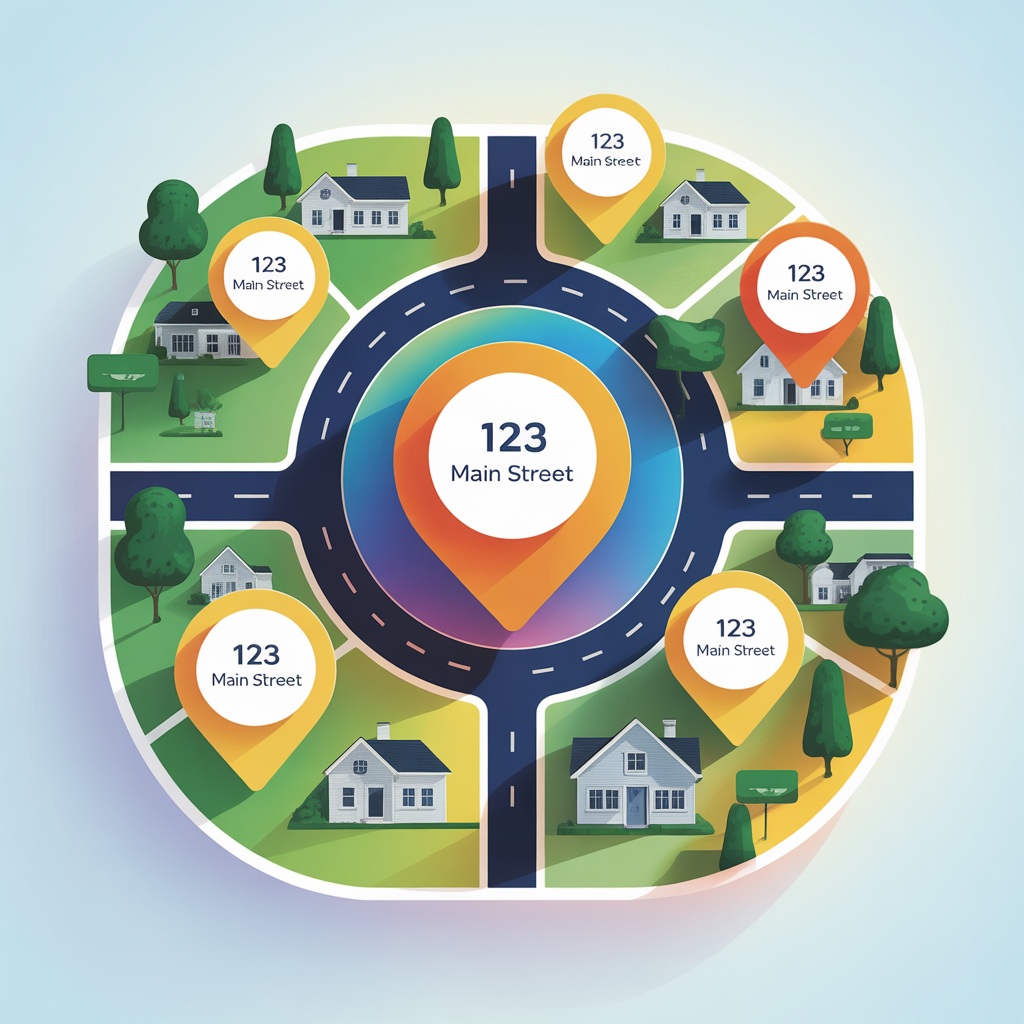
- Create separate service pages combining your service and target location (e.g., “Milford CT HVAC Repair”).
- Include localized content: landmarks, neighborhoods, NAP (Name, Address, Phone) consistency, and embedded maps.
- Add LocalBusiness schema markup to each location page
5. Visual Proof & Trust Signals
Why it matters: HVAC decisions are high‑trust. Prospects expect reviews and credentials front and center.
Best Practices:
Reviews
Display ratings and Google Business reviews prominently above the fold
Credentials
Add badges for certifications, licensing, BBB memberships, and warrantees
Visual Content
Include team photos or videos, and energizing before/after case studies
6. Booking & Lead Capture Tools
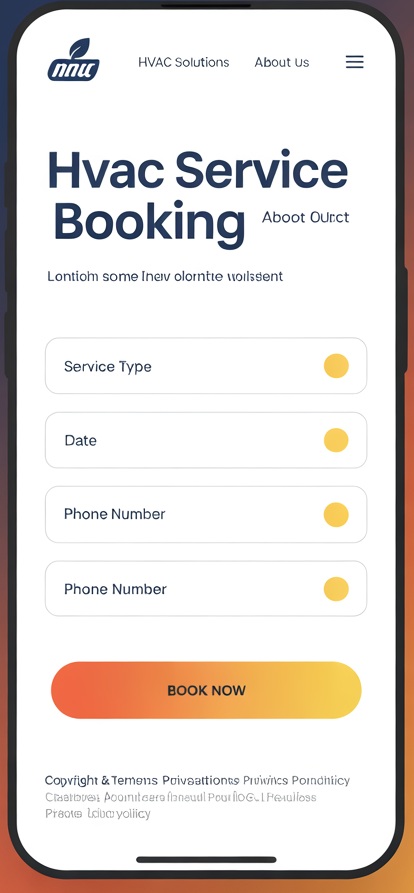
Why it matters: Busy homeowners appreciate convenience. Embedded booking forms reduce friction.
Best Practices:
Include real-time booking or quote forms with minimal fields (name, phone, email) to maximize submissions
Reddit
Provide multiple contact options—tap-to-call, chat widget, SMS contact, and email
7. Educational Content & FAQs
Why it matters: Homeowners often search for HVAC advice before choosing a contractor. High-quality guides build trust.
Best practices:
Blog Articles
Add blog articles such as “How to Lower Energy Bills” or “Signs Your Furnace Needs Service.”
Local Content
Mix local-relevant posts ("HVAC tips in Milford in summer heat") and technical value content
FAQ Section
Use FAQ sections to address common questions (pricing, timeline, emergency service) and reduce friction.
8. Technical SEO Backbone
Why it matters: Technical hygiene supports ranks, visibility, and user trust.
Best Practices:
Use Clean URL's
Use clean, descriptive URLs (e.g. /services/milford-ac-repair/ versus page-id-1234)
On-Page SEO
Add both on-page SEO elements (title tags, meta descriptions, header tags with keywords)
HTTPS Security
Ensure HTTPS security, optimized metadata, and properly formatted alt-tags for images
9. Analytics & Continuous Optimization
Why it matters: Data drives performance improvements and ROI tracking.
Best Practices:
Track
Install Google Analytics and Search Console to monitor key metrics like bounce rate, session duration, and submissions.
Test
A/B test CTAs, page layouts, and form placements.
Update
Update content seasonally or to reflect changing offers (e.g., summer tune-ups, winter prep).
🔧 Example Structure for an HVAC Website
Home Page:
Hero: “Milford’s Reliable HVAC Experts” + strong CTA (e.g. “Get 24/7 Service”)
Trust elements: star rating, license badge, brief USP
Highlight services with service icons & local page links
Location Specific Pages
- Milford, New Haven, Stamford etc.
- Local content description, map embed, testimonials from area customers
Service Pages
- Clearly described services
- Benefit-driven copy, CTAs in multiple spots, embedded reviews
About / Credentials Page
- Team photos, certifications, guarantees, mission.
Blog & Resources
- SEO-rich how-to posts with answer intent
- Local seasonal tips and FAQs
Contact / Book Now
- Easy form submission, tap-to-call, chat support
An HVAC website isn't just a showcase—it's your best lead generator when built right. Want help customizing this for Milford‑area HVAC businesses? I can write localized service page copy, map internal linking, or design a lead‑optimized home page tailored to your brand.
If you want to see what your perfect lead-generating HVAC Website can look like check out the demo site here